Field notes: the week a lock outage backed up barges forty miles upstream
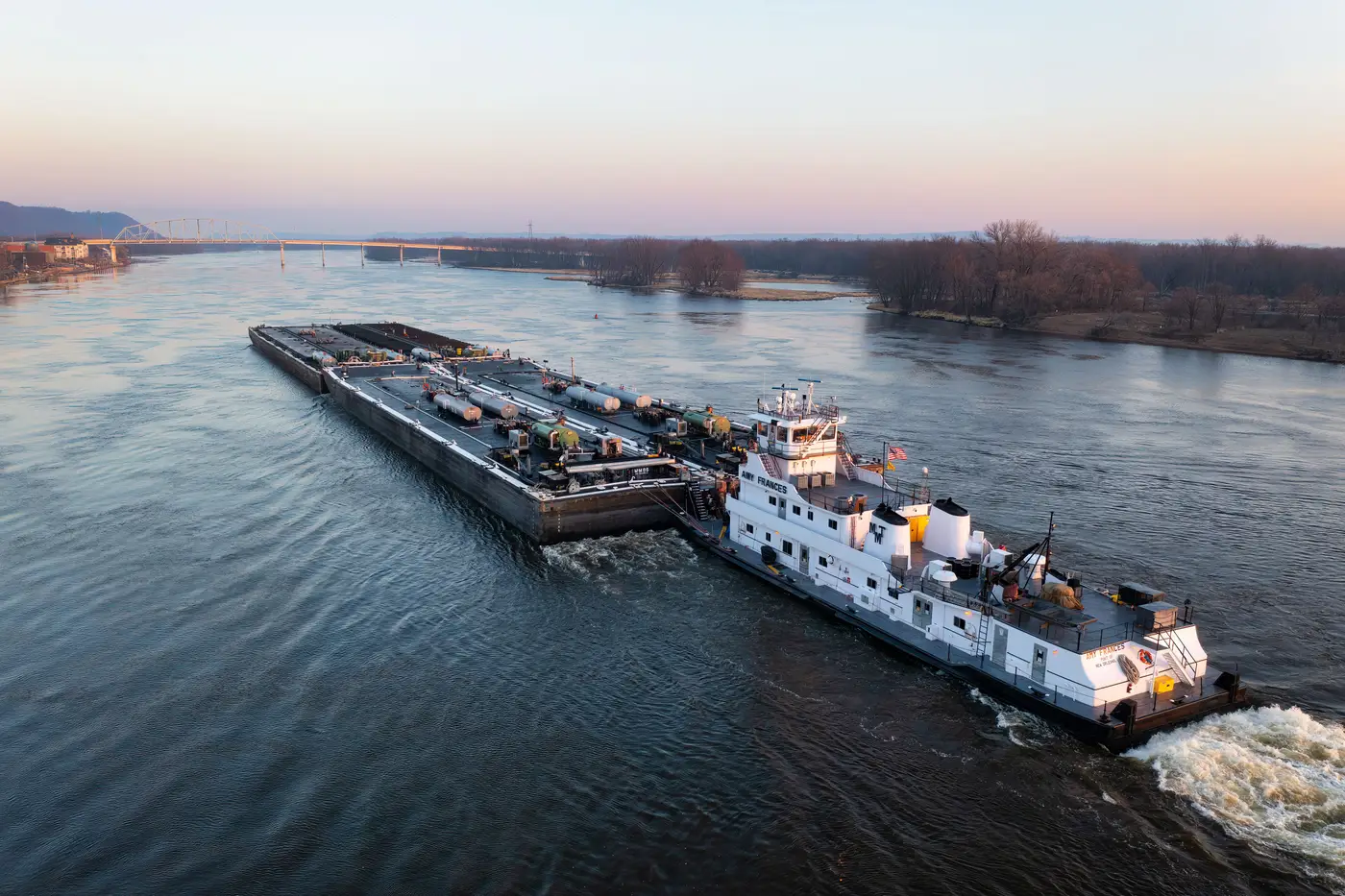
The notice came out on a Tuesday. A miter gate had cracked at one of the river's older lock chambers, the kind of structure that's been dewatered for emergency repair more than once in the last decade. The Corps of Engineers posted a closure window: seven to ten days, subject to extension, which on this river means ten to fourteen.
By Thursday the queue behind it was forty-some miles long.
That number doesn't sound like much until you think about what it's made of. Not forty miles of open water with the occasional boat waiting its turn. Forty miles of tows stacked up nose to stern against the bank, fifteen barges deep in some strings, engines idling or shut down depending on how the pilot's rationing fuel for the wait. Grain barges headed for export elevators downstream. Fertilizer coming up for spring application that's now going to land closer to planting than anyone wants. A few tank barges nobody likes sitting still for long.
The lock outage itself wasn't the surprising part. Gates fail, miter seals wear out, towboats hit things they shouldn't. What struck me, watching this one unfold, was the gap between when the trouble started and when the people with cargo on the water knew what they were dealing with.
The Corps notice told you the lock was closed. It didn't tell you how fast the backup was building. That's a reporting job nobody's assigned to do in real time, and the tow operators closest to the gate simply had better information than anyone three pools back. A broker with freight committed downstream was working off a notice that was accurate the day it posted and stale by the time the queue doubled. A closure travels through official channels on its own schedule. The queue behind it travels by radio, by word of mouth at the fuel dock, by whoever happens to still have a signal, and those two schedules rarely line up.
What ends up happening, every time, is that shippers start calling their carriers for an update, and carriers start calling the lockmaster, and the lockmaster is busy running a lock, not a call center. So everyone's working from whatever was true an hour or two ago, stacked on top of whatever was true the hour before that. Nobody's lying. The information just can't move as fast as the queue grows.
We've started looking at this differently on the corridors we track. A satellite doesn't care whether the lockmaster has time to field calls or whether the broker three pools downstream has a contact at the towing company. It passes over, it counts what's sitting in the pool and above it, and it does that every day whether or not there's a crisis to report. On a normal week the count doesn't tell you much you didn't already know. On the week the gate cracks, it's the difference between hearing about a growing backup from your carrier on day four and watching the queue build from day one.
That's more or less the whole case for keeping a daily watch on a corridor instead of waiting for someone downstream to pick up the phone. It's covered in more detail on the Trade Route Monitoring homepage, if you want the specifics on how the daily status works.
None of this fixes a cracked miter gate faster. The repair crew works at the speed the repair crew works, and nothing changes that. But knowing on day one that forty barges are stacked up instead of finding out on day four changes what you do with the freight you still control, and that's worth something on its own.
If you're running freight through a corridor where a lock, a strait, or a border crossing can turn into forty miles of queue overnight, it's worth seeing your stretch of river covered daily before the next notice goes out.