How to estimate added transit days for a chokepoint reroute
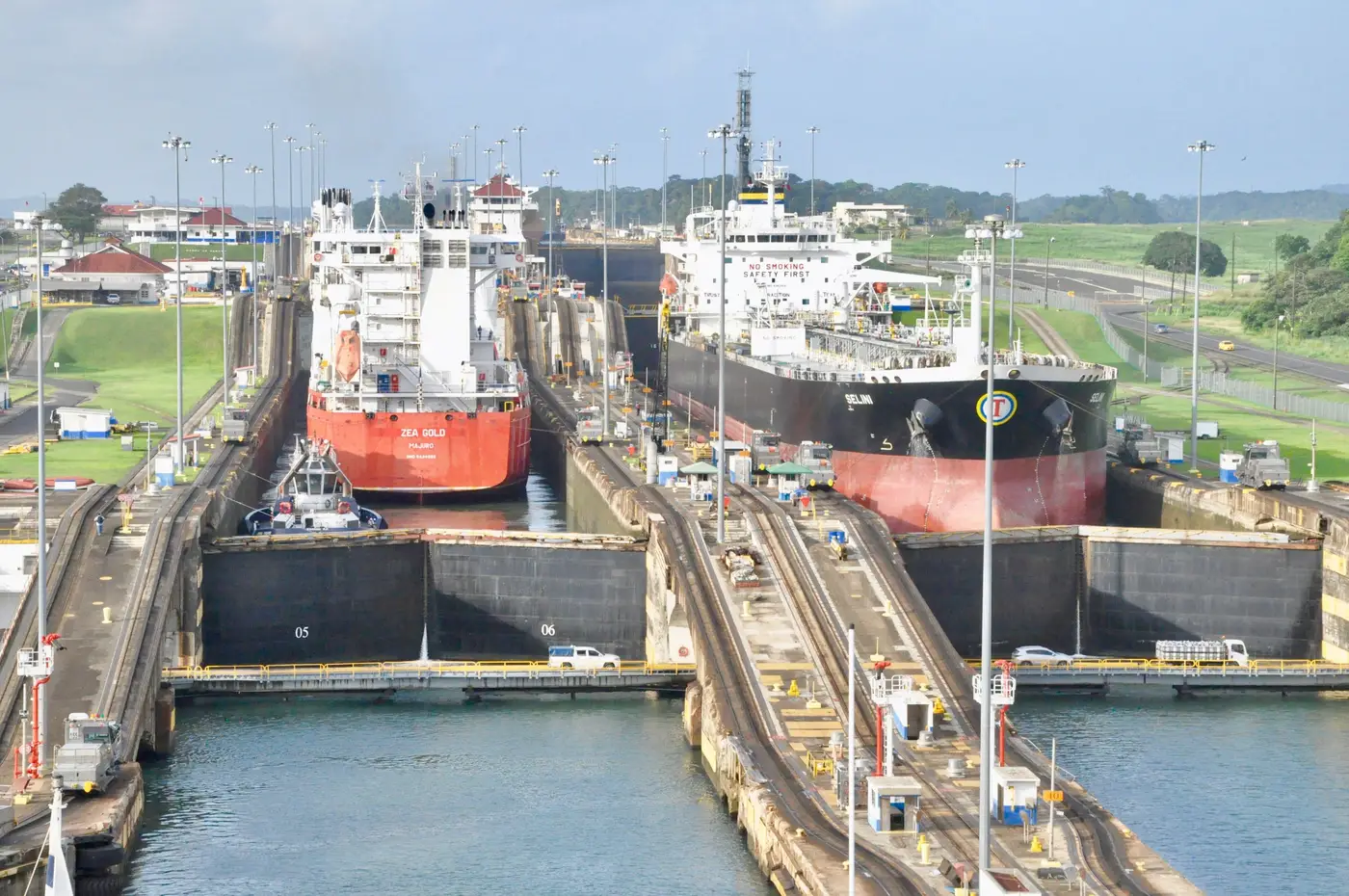
Your carrier notice says "extended transit time, details to follow." That's not a number you can put in a customer email or a laycan. If a vessel is diverting around a blocked canal or strait, you need a working estimate within the hour, not after the carrier's ops team finishes its own math next week.
Here's a method that gets you close enough to plan around, using the same inputs a carrier's network planning desk uses, just faster.
Start with the distance delta
Pull the great-circle distance for the original route and the diversion route between the same two ports. For a Suez closure, that's Suez-routed distance versus the Cape of Good Hope routing. For a Panama disruption, it's canal transit versus an all-water route through the Strait of Magellan or a truck-rail bridge across the isthmus.
Divide the extra nautical miles by the vessel's service speed, usually 18 to 22 knots for a mainline container ship steaming at normal consumption. That gives you a baseline number of added sailing days. For Asia-to-Europe strings diverting from Suez to the Cape, carriers have historically cited roughly 7 to 10 additional sailing days depending on the specific port pair, sometimes more on strings that also skip a port to recover schedule.
That baseline covers sailing time alone. Three things push the real figure higher.
What the distance math doesn't capture
Bunker stops. A vessel built for a Suez routing doesn't always carry enough fuel for a Cape diversion without a bunkering call, and that call itself costs a day or two depending on port availability and queue at the bunkering anchorage.
Speed reduction. Carriers slow-steam to manage fuel burn on a longer leg, which stretches your sailing-day estimate by another 5 to 15 percent depending on how aggressively they're trying to hold schedule integrity versus cut cost.
Congestion at the alternate route itself. This is the one shippers underweight most. When everyone reroutes around the same blockage, the alternate strait or canal starts queuing too. The Cape of Good Hope doesn't have a queue in the way the Red Sea approach does, but Panama's alternates and most land-bridge substitutes do, and that queue time is additive, not already baked into anyone's published transit guide.
A worked example
Say you're moving a 40-foot box from Jebel Ali to Rotterdam. Suez routing runs roughly 11,600 nautical miles and takes about 18 to 20 days at service speed. Cape of Good Hope routing runs closer to 14,500 nautical miles. At 19 knots that's an extra 6 to 7 sailing days before you add anything else.
Add a bunker call at Cape Town or Durban: another 1 to 2 days. Add typical schedule-recovery slow-steaming on the remaining leg: another 1 to 2 days. You land at 9 to 12 added days total, which lines up with what most carriers quoted during the 2024 Red Sea diversions. Quote that range internally and to customers until you have a confirmed vessel position, not a single number.
Why the number keeps moving
The estimate above assumes the diversion route stays clear. It usually doesn't stay clear for long once volume shifts onto it. Port call durations at the alternate ports lengthen as more strings route through them. Bunkering queues extend. If your product or your contracts assume a fixed "add 10 days" rule, revisit that number every couple of weeks for as long as the primary chokepoint stays blocked.
This is also why a static industry estimate from the first week of a closure stops being useful by week six. The ships that confirmed a 10-day addition in week one are not necessarily the ships confirming 10 days in week six, because the alternate route's own congestion has changed the math.
If what you actually need is a daily read on how backed up the chokepoint itself is, rather than a one-time estimate of the detour, that's a different problem than route math, and it's the one we built Trade Route Monitoring to answer: vessel count behind the blockage, reported daily, before your carrier's own notice catches up.
Run your own distance-delta math for the routes you depend on, then check whether the chokepoint you're avoiding is still worth avoiding.