Customs strike or system outage? Reading a border crossing delay
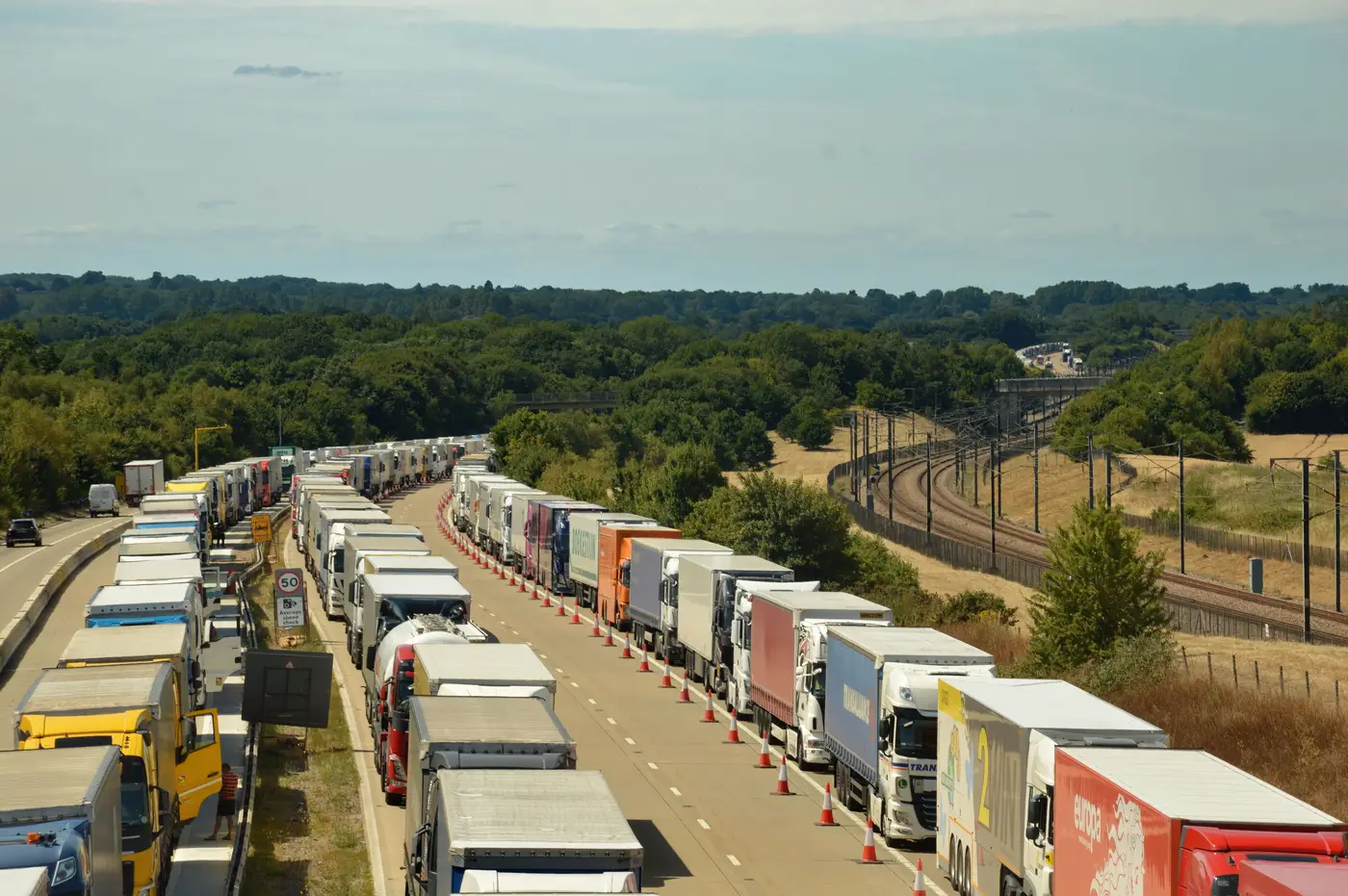
A border crossing goes quiet, trucks stop moving, and your dispatch board fills with red. The carrier says "delay at the crossing." That's it. No cause, no estimate, nothing you can plan around.
Whether that delay is a customs IT outage or a labor action matters more than people think. One clears in hours once a server reboots. The other can run for days and spread to the next crossing down the corridor as drivers reroute. Telling them apart early changes whether you hold a shipment, reroute it, or just wait it out.
What a system outage actually looks like
A customs system outage is a technical failure, usually on one side of the border. ASYCUDA goes down, a national single-window platform has a bad deploy, or a power issue takes out the inspection terminals at one post. The signature is specific: queues build fast on one direction of travel, inspection booths are staffed and open, and officers are physically present but can't process entries because the system won't accept a filing.
A few things tend to hold true in an outage:
- The backlog is one-directional. Traffic clears normally going the other way across the same crossing.
- Trucks are moving in the queue, just slowly, because manual processing is happening where it can.
- There's no picketing, no signage, no visible protest at the gate.
- Recovery is sudden: the queue drains within a few hours once the system comes back online.
If your carrier mentions a specific system by name, or says something like "the port can't process entries right now," that's an outage, not a strike.
What a labor action looks like
A customs strike, work-to-rule action, or broker walkout reads differently on the ground. Inspection lanes may be fully staffed but deliberately slow, officers may be working strictly to the letter of procedure (which multiplies inspection time per truck), or lanes may be closed outright with visible picket activity.
The tells here:
- Both directions of travel back up, not just one.
- The slowdown is gradual and sustained rather than a hard stop, because work-to-rule actions ramp inspection time rather than halting it.
- Local news or union statements precede the backlog by a day or two. Outages rarely have advance warning; labor actions usually do.
- Recovery takes longer and often comes in stages, as different shifts or union locals settle separately.
Freight forwarders who've worked a corridor for years will sometimes know a labor dispute is brewing before it hits the queue. If your network doesn't have that local intelligence, you're flying blind until the trucks already stop.
Why the distinction changes your move
If it's an outage, the right call is usually to hold near the border and wait. The queue clears once the system's back, and rerouting burns fuel and time for nothing.
If it's a labor action, rerouting to an alternate crossing or mode earlier is usually the better call, especially if the dispute involves a specific union local or shift pattern rather than a system-wide policy. Labor actions also tend to have knock-on effects: drivers who've waited two days at one crossing will divert to the next one, pushing that queue up too.
Either way, the carrier is usually the last to confirm what's happening, because their first job is managing the trucks already in line, not diagnosing the cause. By the time you get a formal note from your carrier, the queue has often already been building for half a day.
A daily corridor status that tracks queue length, independent of what any single carrier reports, gives you that read before the delay shows up as a missed appointment. Trade Route Monitoring watches named crossings and corridors every day and flags when a queue count or closure diverges from normal, so you're not reconstructing the cause from a carrier's one-line text message after the fact.
If you run freight through a chokepoint that's stalled you before, it's worth seeing what a daily queue count would have told you the last time it happened.