What a lock outage does to barge queues on a river corridor
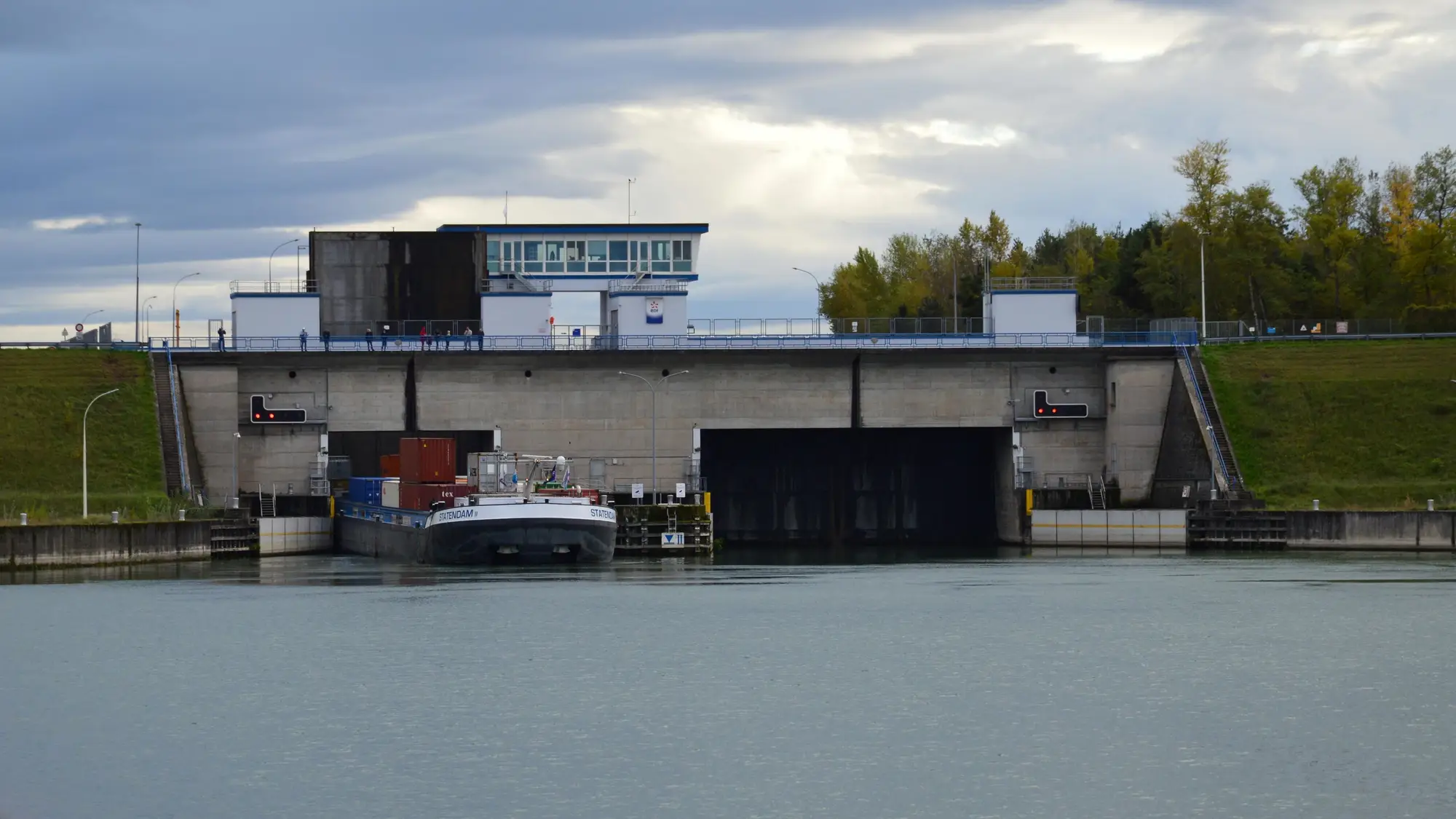
A lock outage is any period when a lock chamber can't pass tows, whether that's a scheduled maintenance closure, an unscheduled mechanical failure, or damage from a barge strike on the miter gates. On most river corridors there's only one chamber doing the work, sometimes two if the lock is old enough to have an auxiliary. Take that chamber out and every tow on the pool above and below it has nowhere to go.
The math behind the backup is simple and brutal. A single lockage, filling or emptying the chamber and moving one tow through, can take 30 to 60 minutes under normal conditions. A 15-barge tow that has to break apart into smaller cuts to fit the chamber adds another hour or two per cut. Now take the chamber offline entirely for a gate repair that runs 36 hours, which is routine for a worn miter gate, and you've got tows stacking up on both sides faster than the lock can clear them once it reopens.
Why the delay compounds instead of just pausing
A river corridor is a chain of pools connected by locks. A closure at one lock spreads delay across the whole chain, holding up boats well beyond that spot. Towboats still underway when the outage starts have to find somewhere to tie off, and mooring space near a lock is limited. Boats further back slow down or anchor rather than burn fuel running up to a wall that's already full. Meanwhile tows that already cleared the lock keep moving downstream, so the corridor develops a traffic jam on one side and open water on the other.
Once the lock reopens, it doesn't clear the backlog in one pass. The chamber processes tows one at a time, in whatever order the lockmaster sets, and a 36-hour outage can easily generate 60 to 80 hours of clearing time afterward because every lockage during that stretch is competing with the ones that stacked up. Grain barges, coal, fertilizer, it doesn't matter what's on board, everyone's waiting on the same chamber.
Where the information gap actually hurts
The Corps of Engineers posts lock status through its Lock Performance Monitoring System, and that's the authoritative source once an outage is logged. The problem is timing. A gate failure at 2 a.m. doesn't always make it into the public notice system before a towing company's dispatch desk opens, and even once it's posted, the notice tells you the lock is down, not how many tows are already sitting above and below it or how long the queue has been building.
A shipper relying on a barge line's ETA update is getting that number filtered through the carrier's own scheduling assumptions, which get stale the moment conditions on the river change. By the time a carrier confirms "we're delayed," the queue has often been forming for a day or more. For a grain elevator timing a vessel at the Gulf, or a terminal operator deciding whether to hold cargo or truck it around the bottleneck, that lag is the difference between adjusting a schedule and eating a missed vessel window.
This is the gap an operator tracking the corridor directly closes, by watching the chokepoint itself rather than waiting on a status update to travel through someone else's dispatch chain.
What actually signals trouble before the carrier calls
A few things tend to show up before the official delay notice does: tows holding position above a pool instead of approaching the wall, barges rafted together at anchorage points near the lock, and a visible gap in the normal traffic pattern downstream of the chamber. None of these require a lock to be formally logged as "out" to matter. A lock running at half capacity because of a partial equipment failure produces the same queue buildup as a full closure, just slower.
Barge traffic doesn't recover the moment a lock reopens either. Anyone scheduling around a corridor is really scheduling around the queue, not the outage notice.
If you move freight through a corridor where one lock outage can cost you days, Trade Route Monitoring tracks the queue at your chokepoint daily, so you see congestion building before your carrier confirms it.